Context & problem
Cincinnati’s nightlife sits in an awkward middle ground: high-energy venues that prioritize volume, alcohol and chaos, or overly curated spaces that feel performative and inaccessible.
Through primary interviews, a consistent gap emerged, people want environments that allow conversation, foster connection, and sustain energy over time without overwhelming the senses. Existing venues rarely balance acoustics, lighting, spatial comfort, and activity. The result is short dwell time, fragmented social experiences, and limited community formation.
Users needed a way to engage socially in a space that is both stimulating and grounded, because current nightlife environments force a tradeoff between energy and intimacy.
Through primary interviews, a consistent gap emerged, people want environments that allow conversation, foster connection, and sustain energy over time without overwhelming the senses. Existing venues rarely balance acoustics, lighting, spatial comfort, and activity. The result is short dwell time, fragmented social experiences, and limited community formation.
Users needed a way to engage socially in a space that is both stimulating and grounded, because current nightlife environments force a tradeoff between energy and intimacy.
Intent
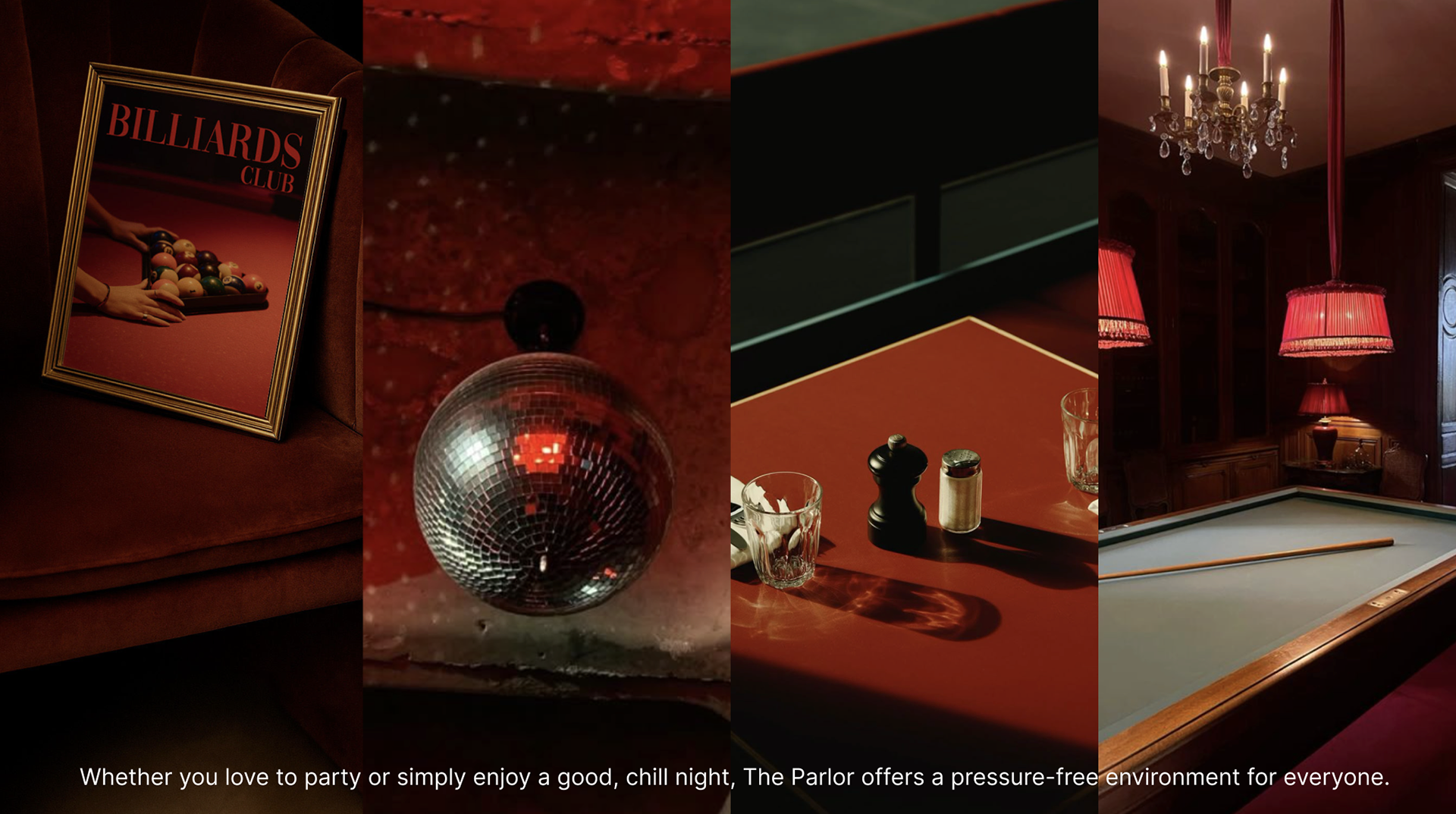
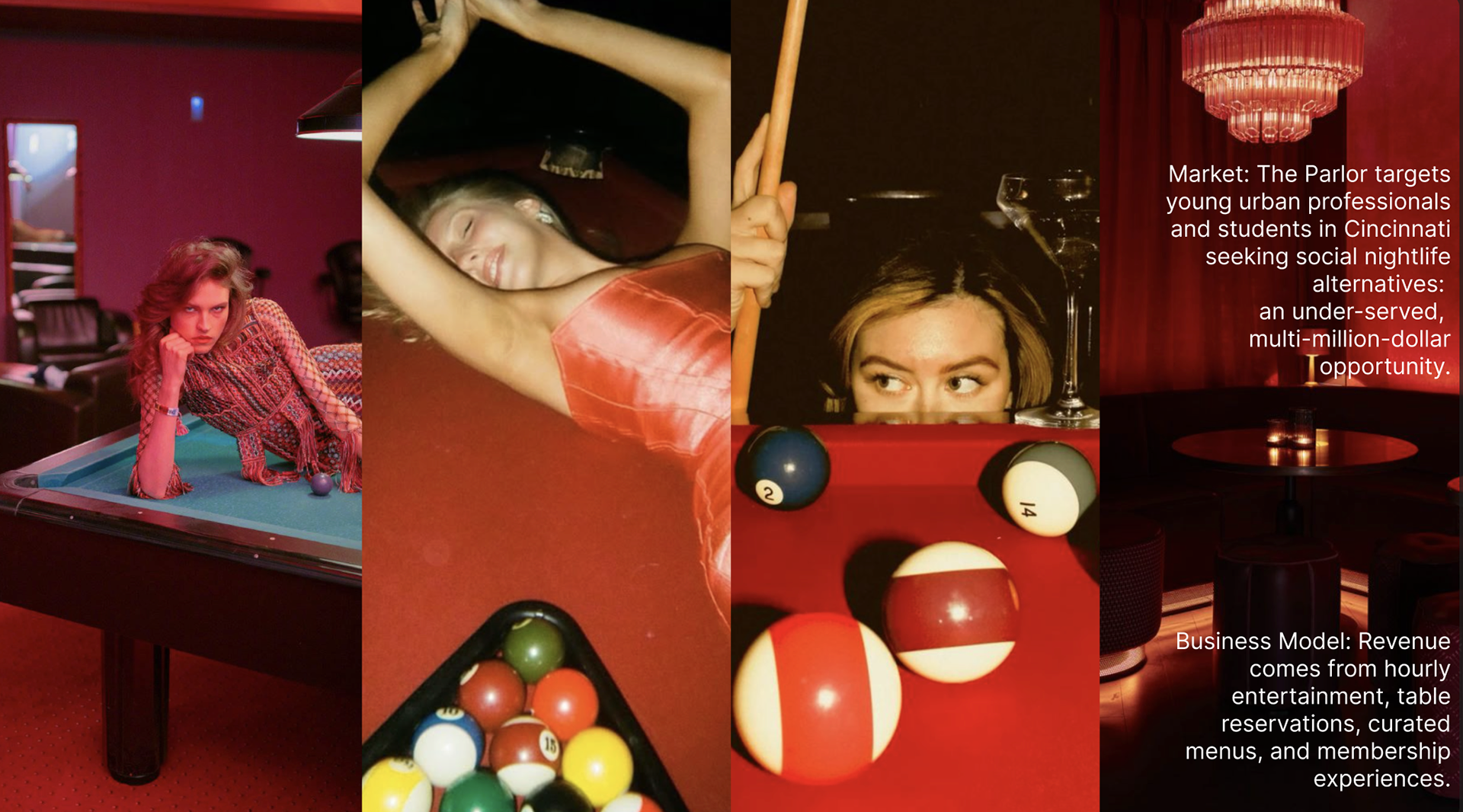
The Parlor is designed as a modern billiards salon; an environment that reframes nightlife as an experience of sustained presence rather than peak stimulation. The goal is to create a space where people can talk, play, observe, and linger. It positions itself between bar culture and social club: accessible, elevated, social, and not chaotic. The intent is not just to host activity, but to choreograph how people feel, move, and interact within the space.
Constraints
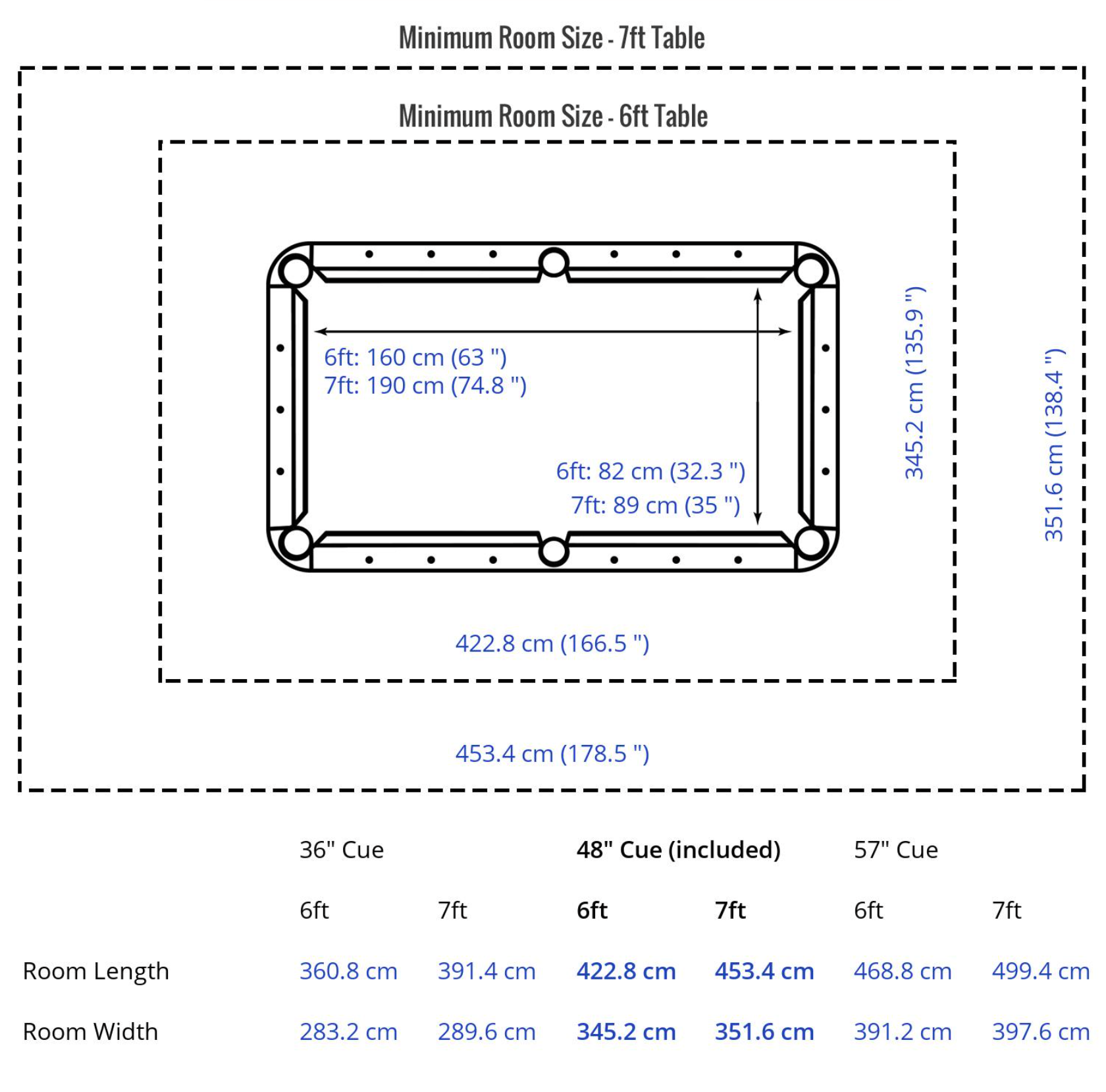
The project operates within spatial, behavioral, and cultural constraints. Physically, billiards requires significant clearance, limiting density and forcing careful layout planning. Behaviorally, users want low-pressure interaction; no forced engagement, but enough structure to avoid passivity. Culturally, the space must feel refined without becoming exclusive or pretentious. Additionally, as a speculative concept grounded in real user insight, the design must remain feasible in terms of circulation, zoning, and operational flow.
strategy
The strategy centers on balance between energy and calm, openness and intimacy, structure and freedom.
This is achieved through three key principles:
1. Spatial Zoning: Differentiating areas for play, conversation, and observation without rigid separation.
2. Atmospheric Control: Using lighting, acoustics, and materiality to modulate mood throughout the night.
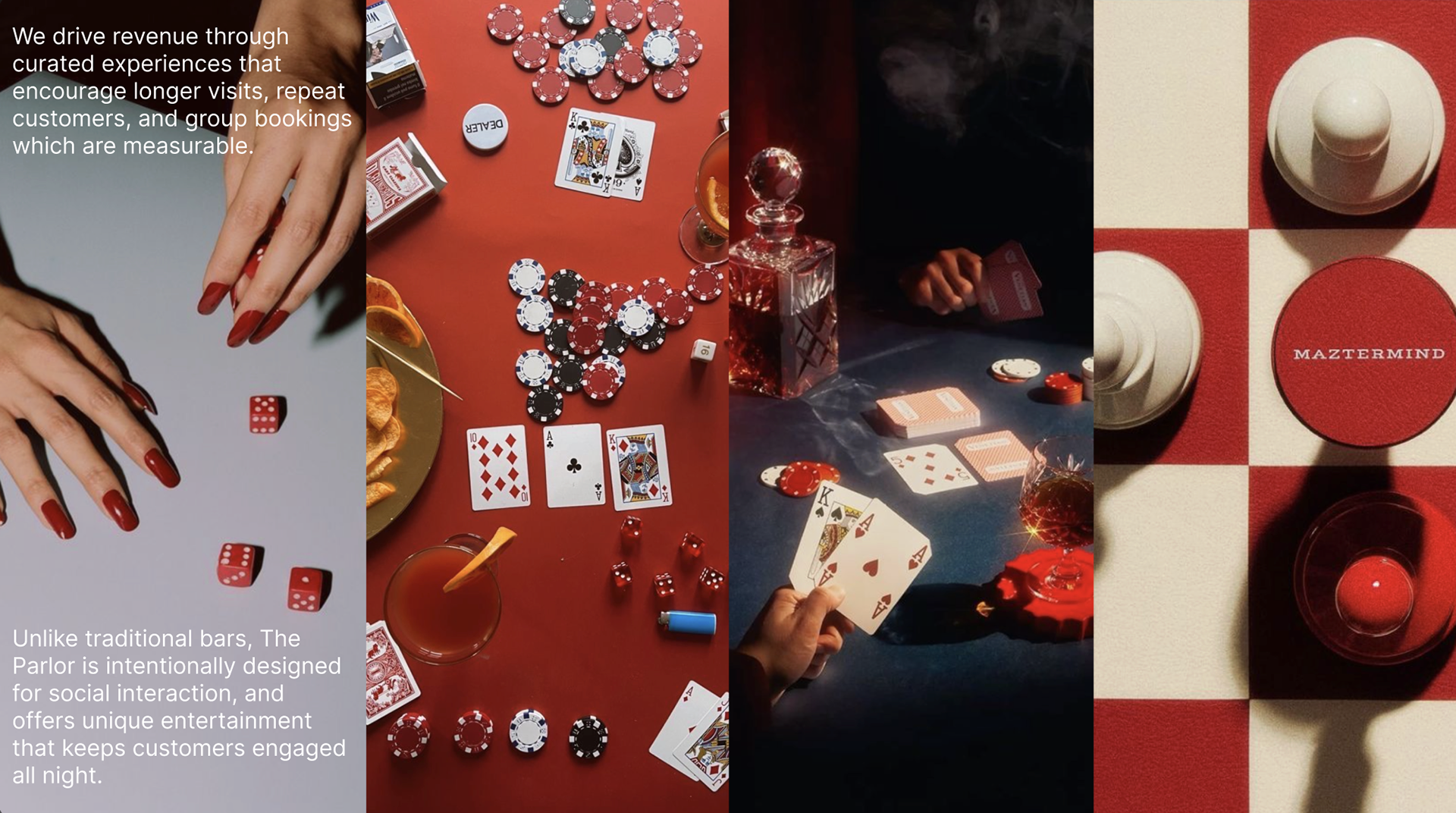
3. Soft Interactivity: Introducing billiards and analog activities as low-barrier engagement tools that naturally facilitate social interaction.
1. Spatial Zoning: Differentiating areas for play, conversation, and observation without rigid separation.
2. Atmospheric Control: Using lighting, acoustics, and materiality to modulate mood throughout the night.
3. Soft Interactivity: Introducing billiards and analog activities as low-barrier engagement tools that naturally facilitate social interaction.
Rather than relying on spectacle, the space builds depth through subtle environmental cues.
PITCH STORYBOARDING & MVP
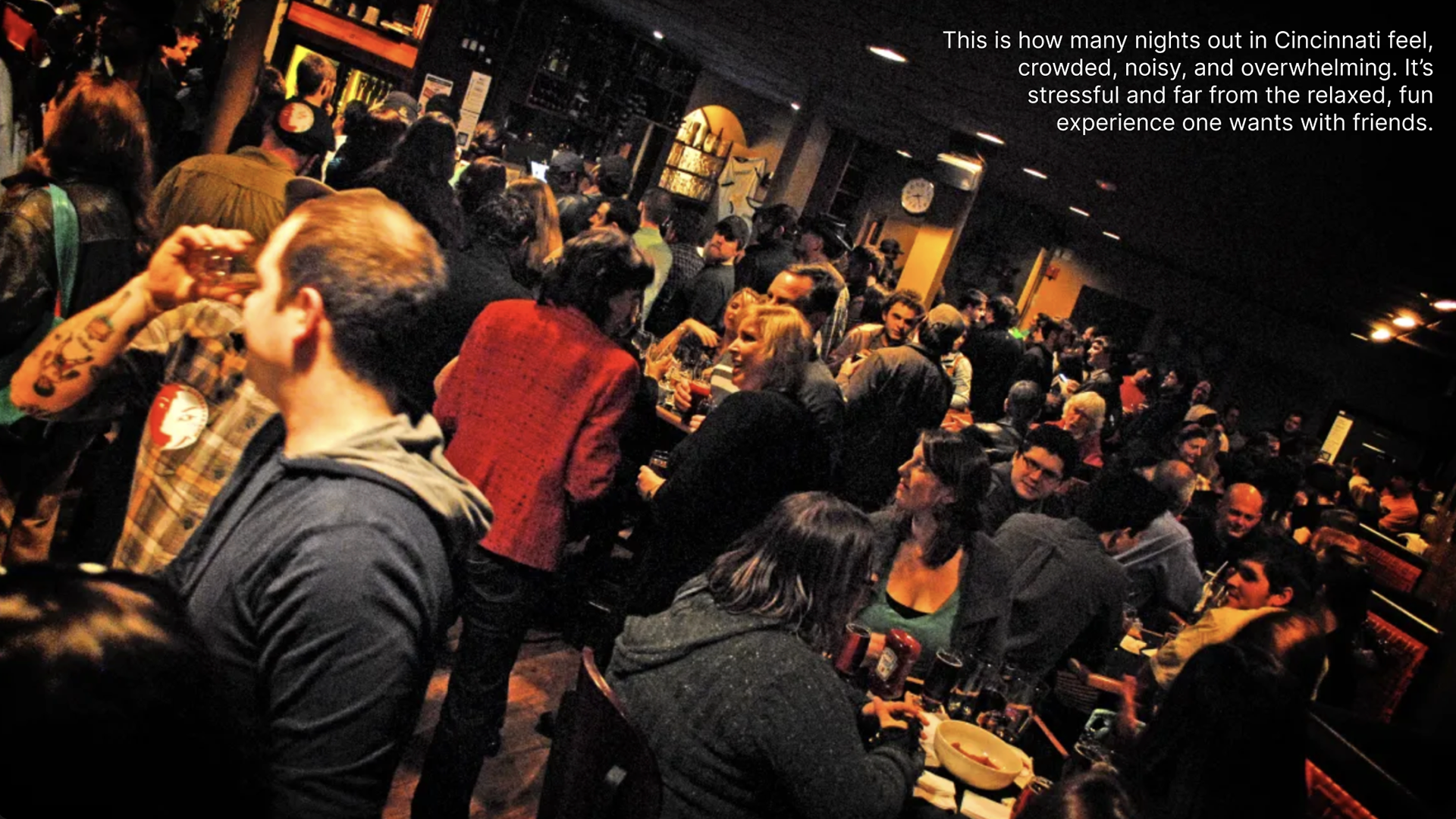
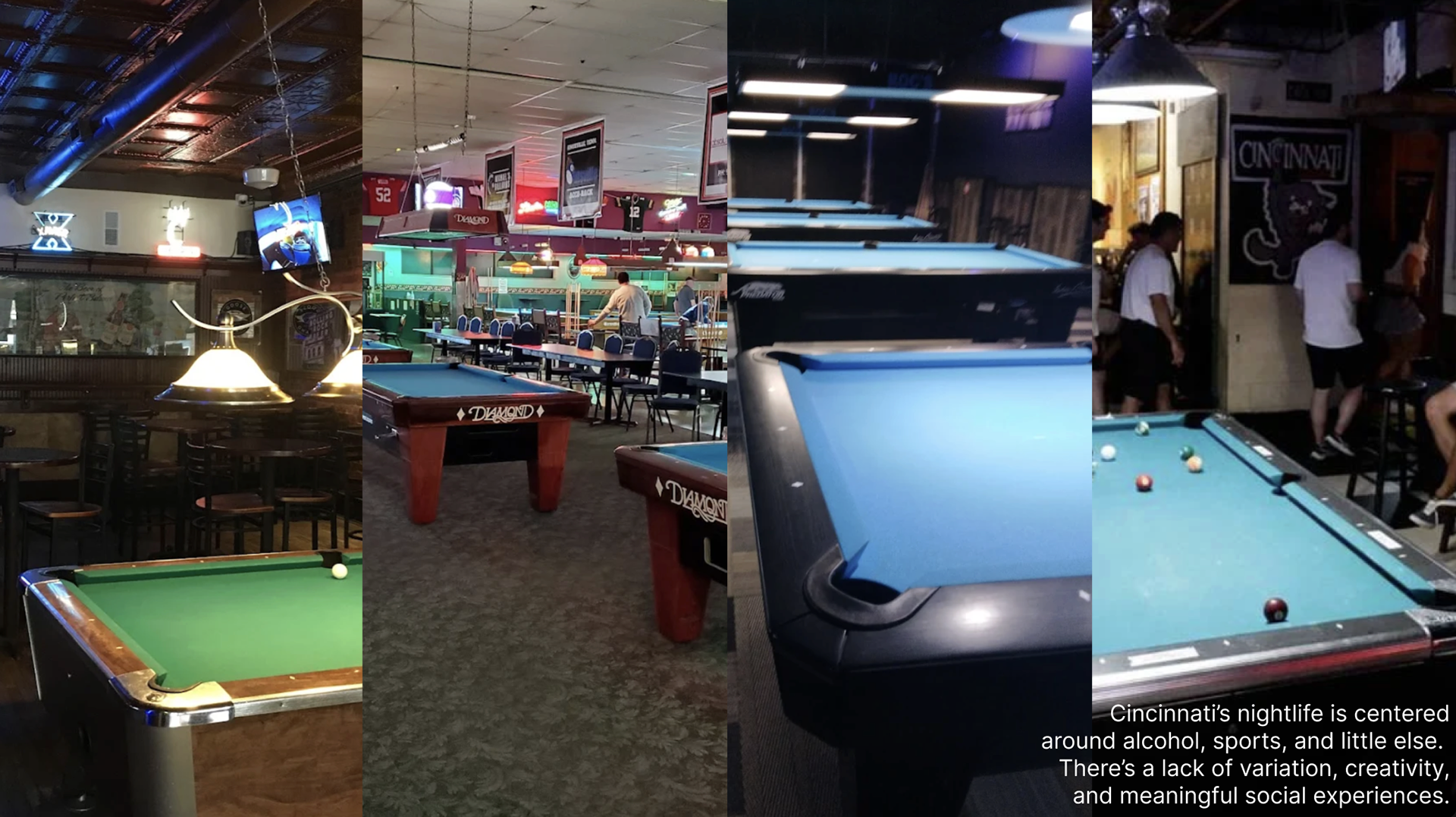
IMAGE SOURCE: Google Images
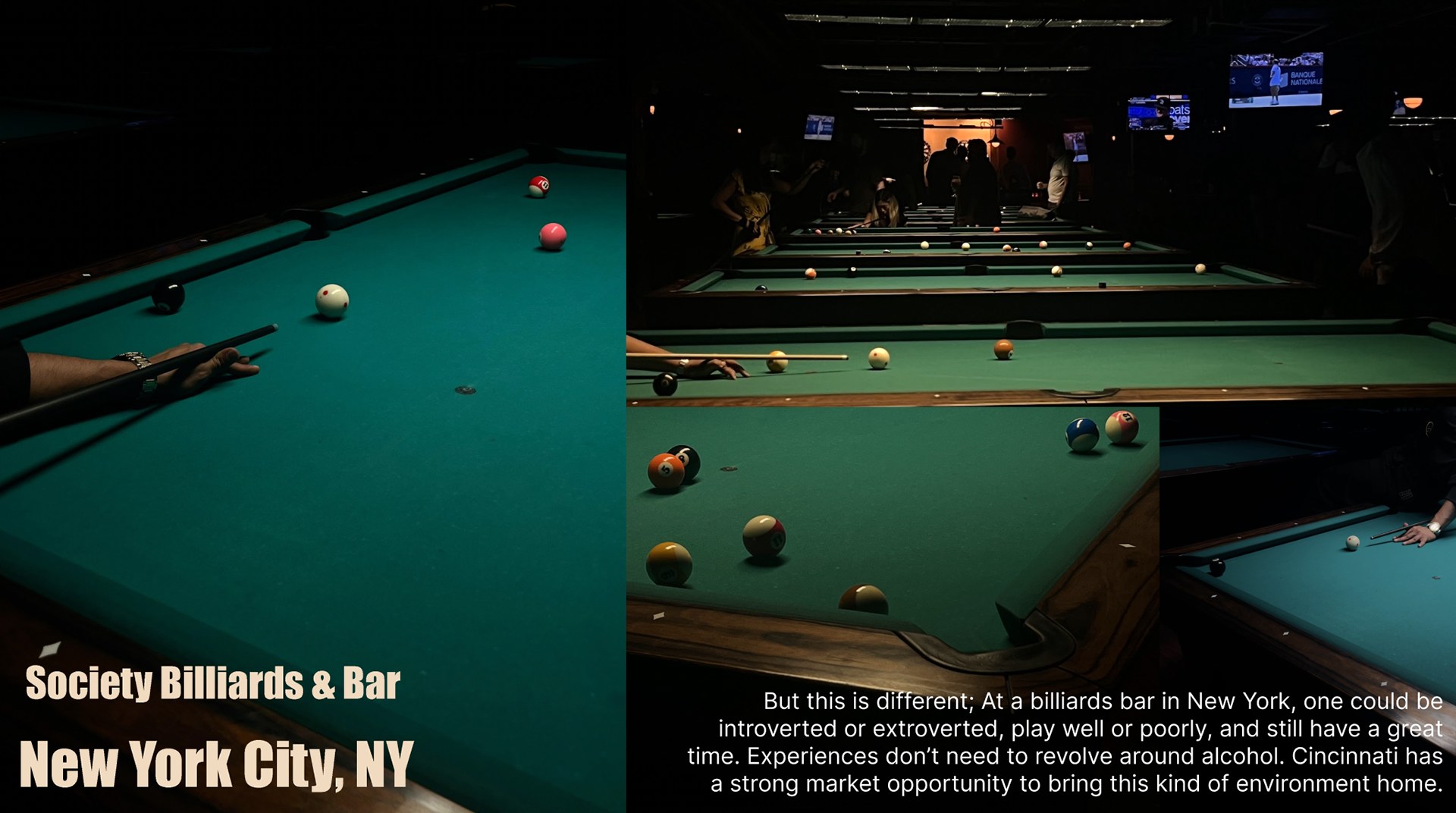
IMAGE SOURCE: Self-taken
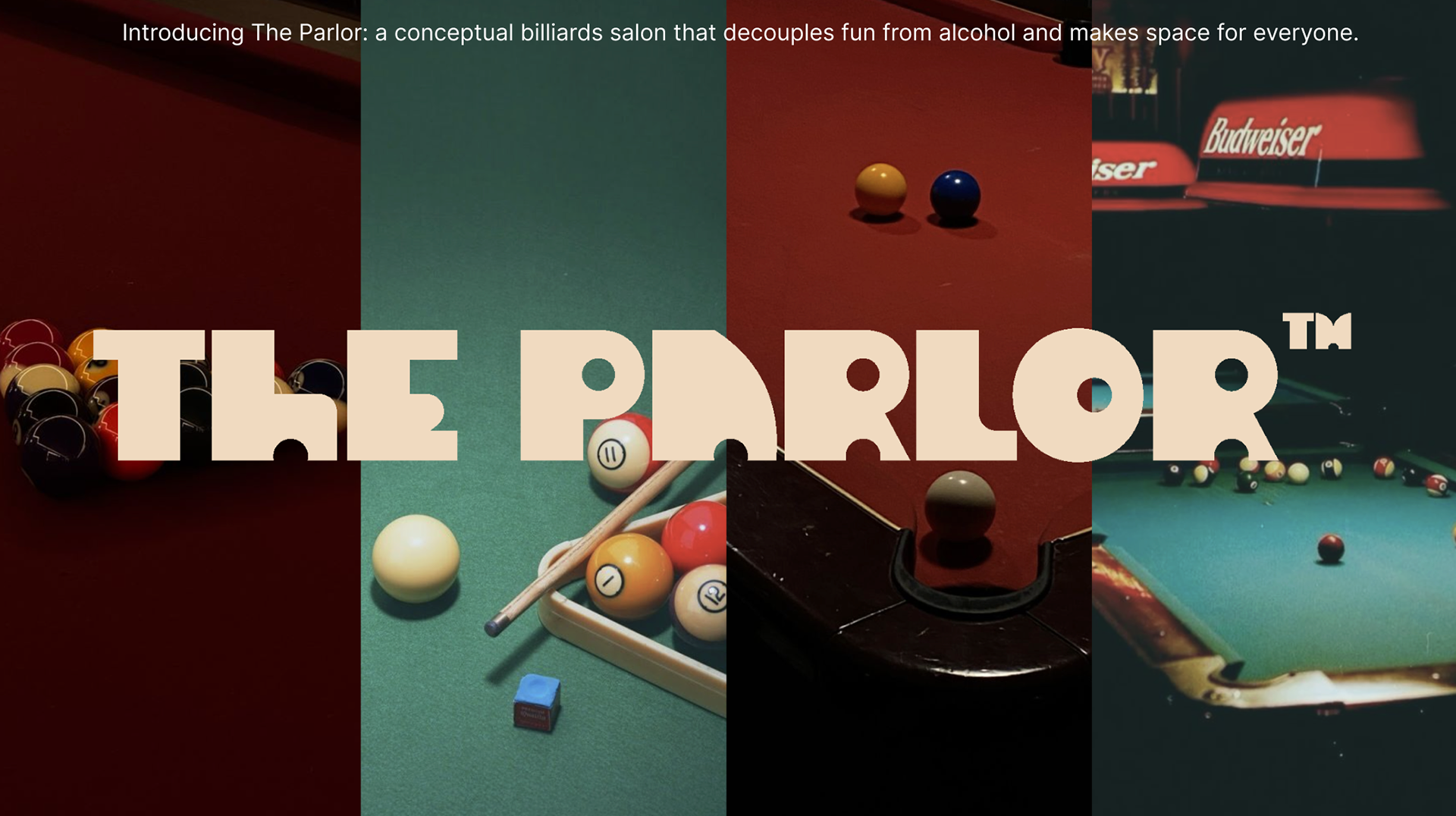
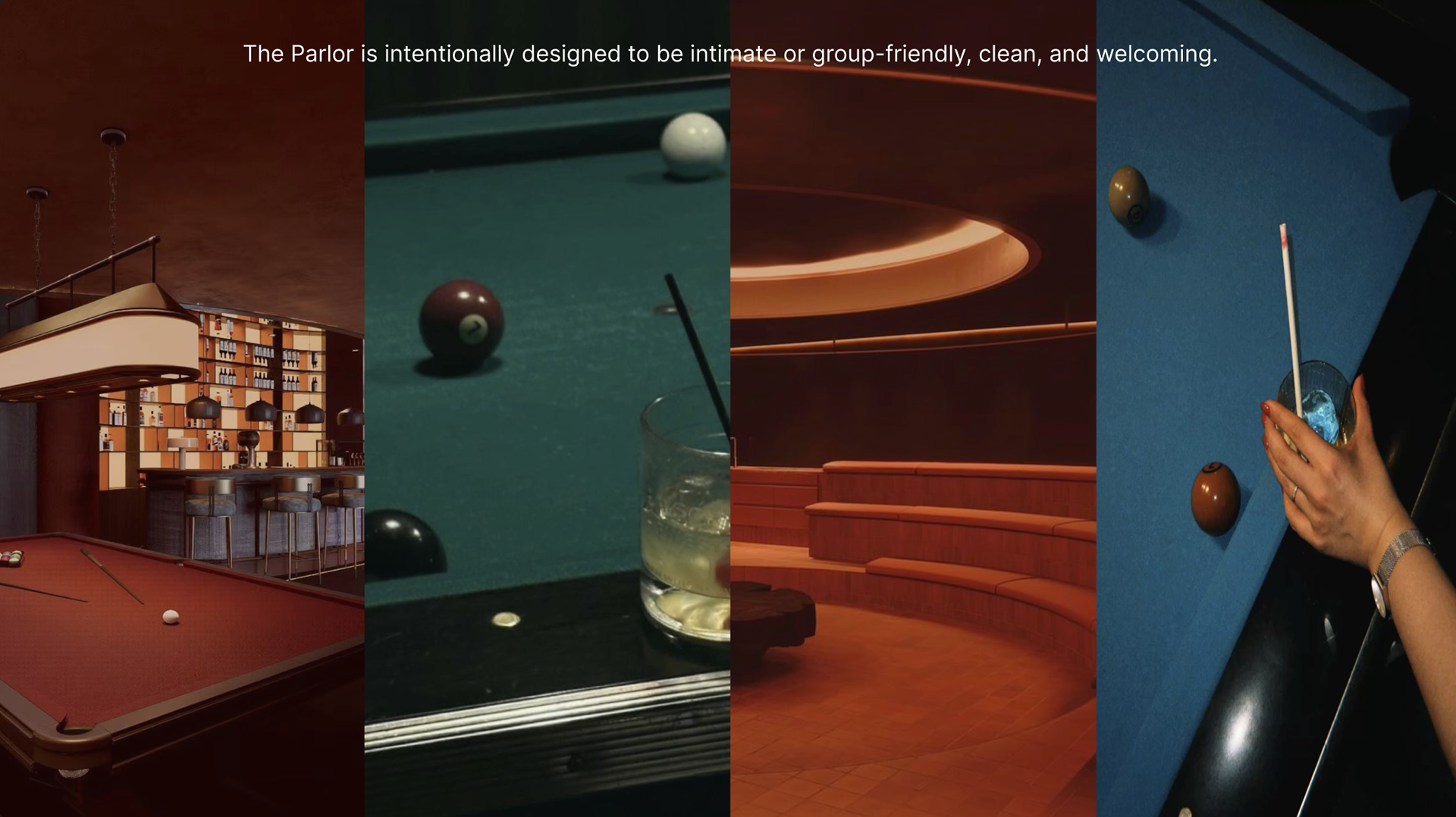
IMAGE SOURCE: Pinterest
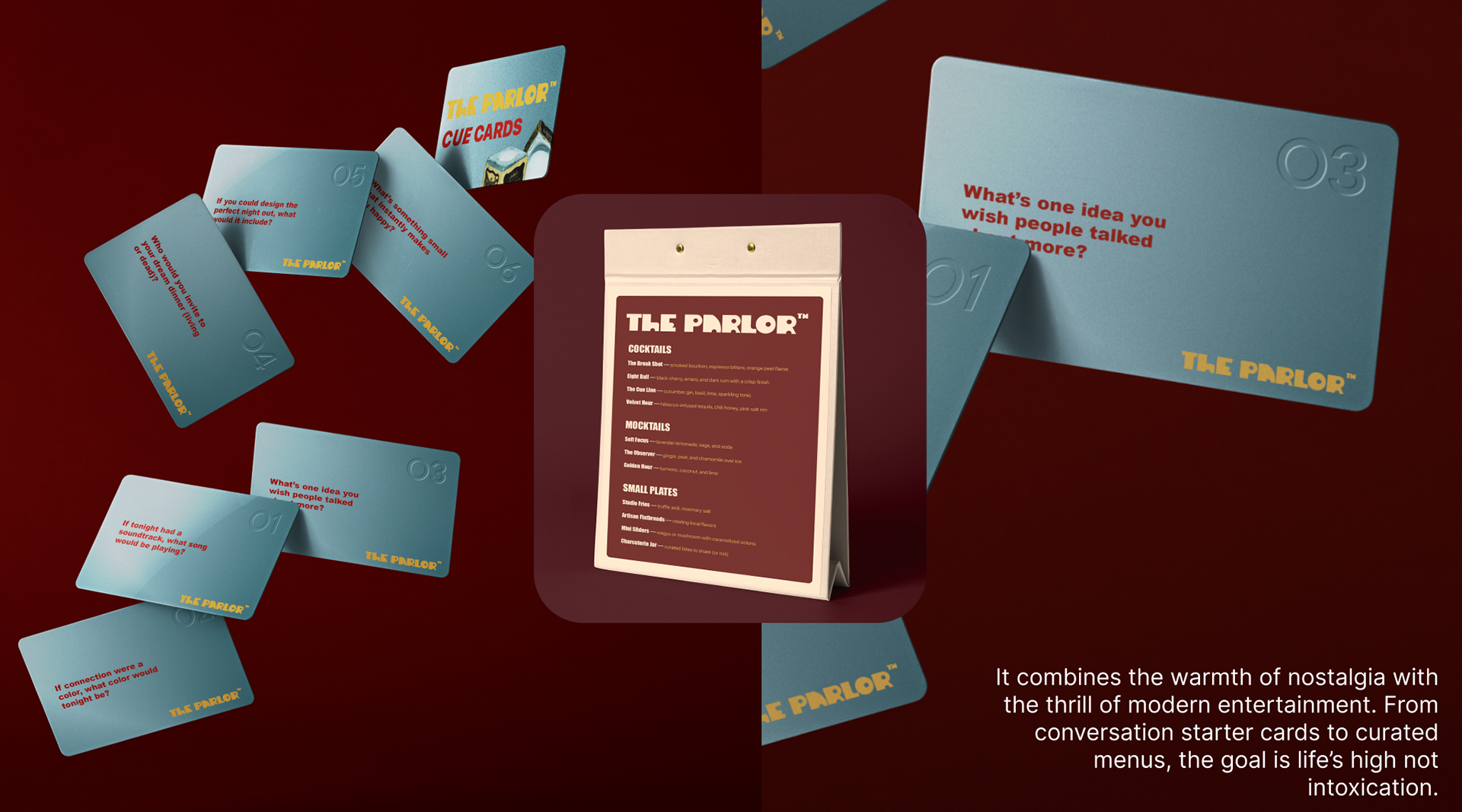
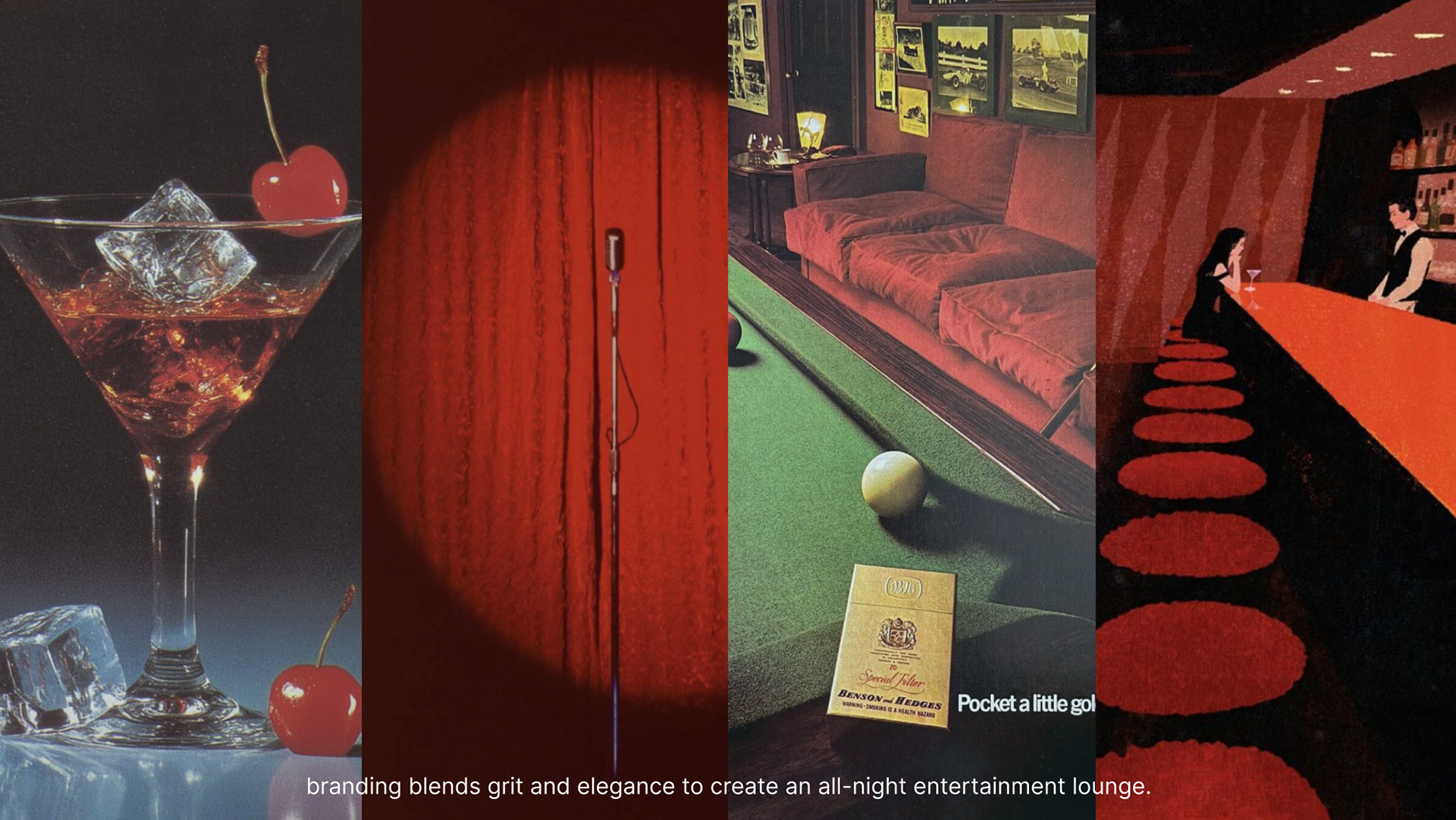
IMAGE SOURCE: Self-made
process
The process began with user interviews and behavioral mapping to understand how people navigate nightlife environments. I did the project as part of my Introduction to Innovation class, the objective was to rapidly diagnose a real-world problem and find an innovative solution, represented through an MVP. Therefore, initially I created simple touchpoints that reflected solutions to the core problem and created an investor pitch based on the Lean Startup methodology.
After the term ended, I took this project on as a personal upskilling application to learn spatial design more explicitly. This involved understanding the architectural/ interior design side of spatial design, beyond what has been taught in my Communication Design degree.
Based on the user insights I had gathered, I translated them into spatial requirements: ideal noise levels, seating preferences, lighting conditions, and activity types. From there, I learnt about adjacency diagrams and circulation flows, followed by understanding how to create and understand floor plans that accounted for billiards clearances and social clustering. Parallel to spatial design, I defined the brand tone and experiential direction further to ensure consistency between physical and emotional design layers. I began experimenting with SketchUp to model the space, test my understanding of proportions, and explore viewpoints.
decisions
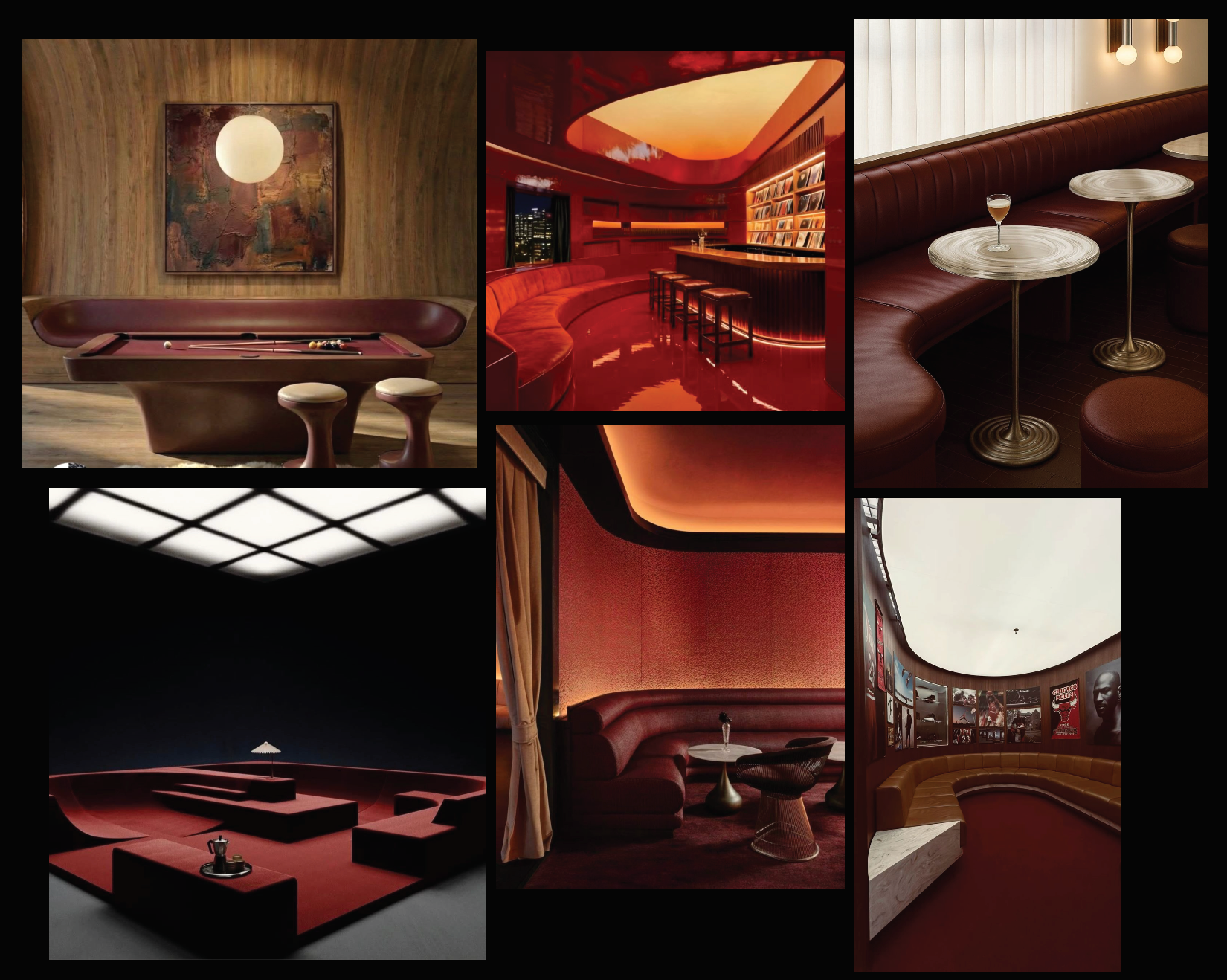
Key decisions were driven by user behavior rather than aesthetic preference. Pool tables became the central organizing element, serving as a social anchor. Lighting was kept warm and layered to avoid harsh contrasts and support longer stays. Seating was varied (bar, lounge, edge conditions) to accommodate different social modes. Music was positioned as ambient rather than dominant, reinforcing conversation over performance. The overall design avoids excess, removing distractions to let interaction become the primary experience.
execution (IN PROGRESS)
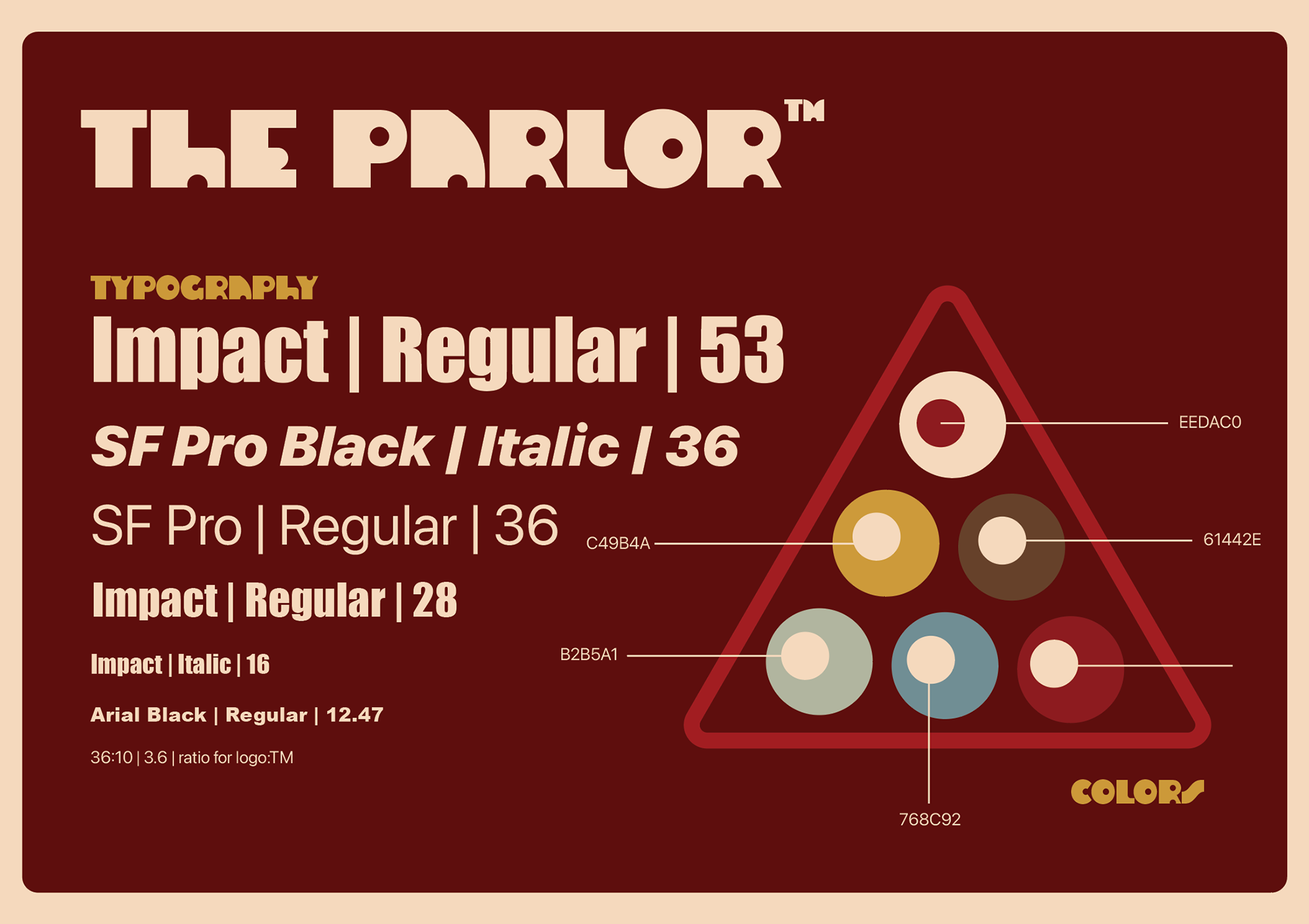
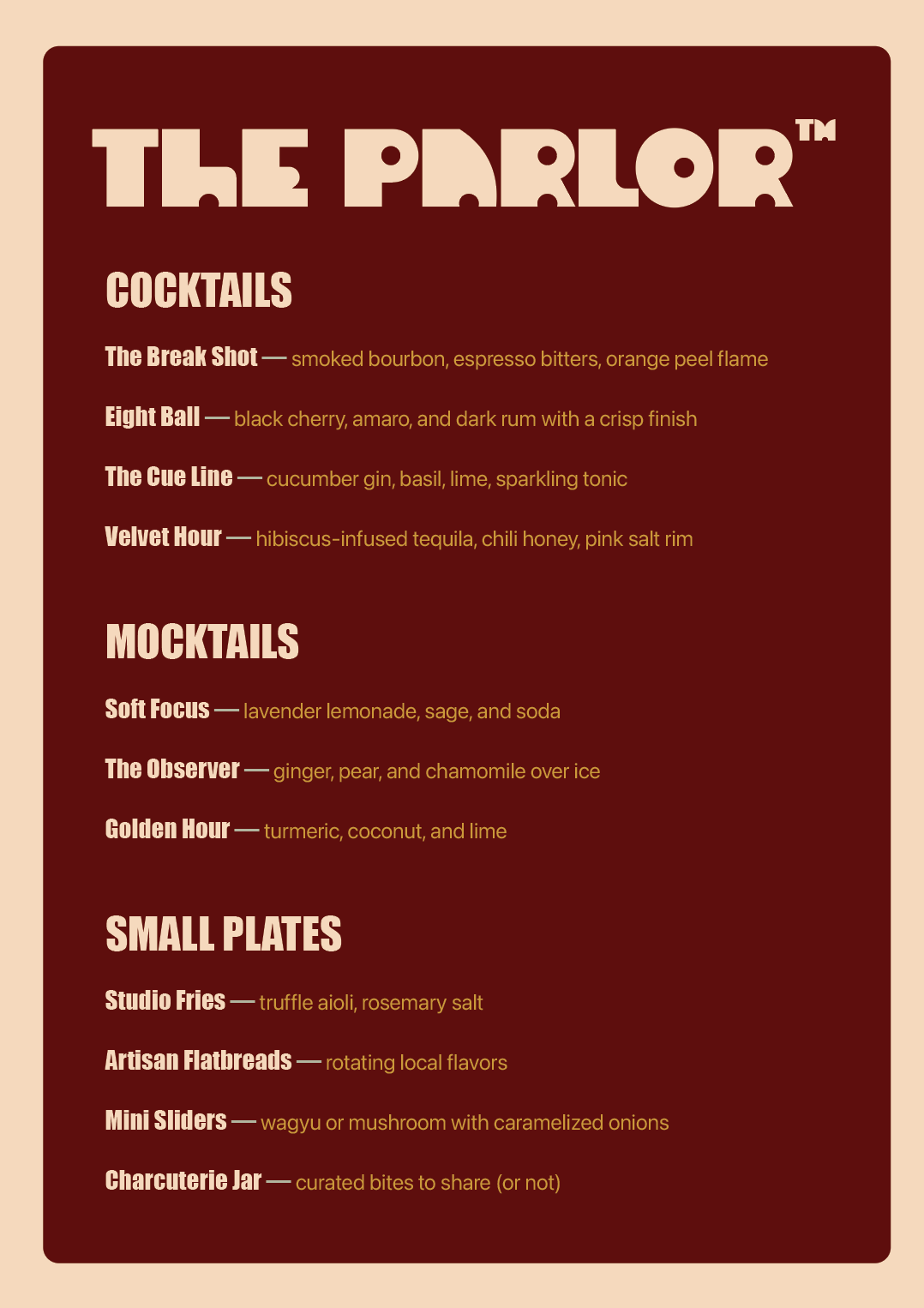
The final output includes a to-scale floor plan with eight billiards tables, ensuring proper circulation and play clearance. Spatial zones are articulated through layout, material suggestions, and lighting direction rather than physical barriers. Rendered views communicate atmosphere: warm, low-lit, and texturally rich. The brand system complements the space: minimal, understated, and editorial, aligning with the intended audience and experience. Together, these elements present a cohesive experiential concept that integrates spatial, behavioral, and visual design.
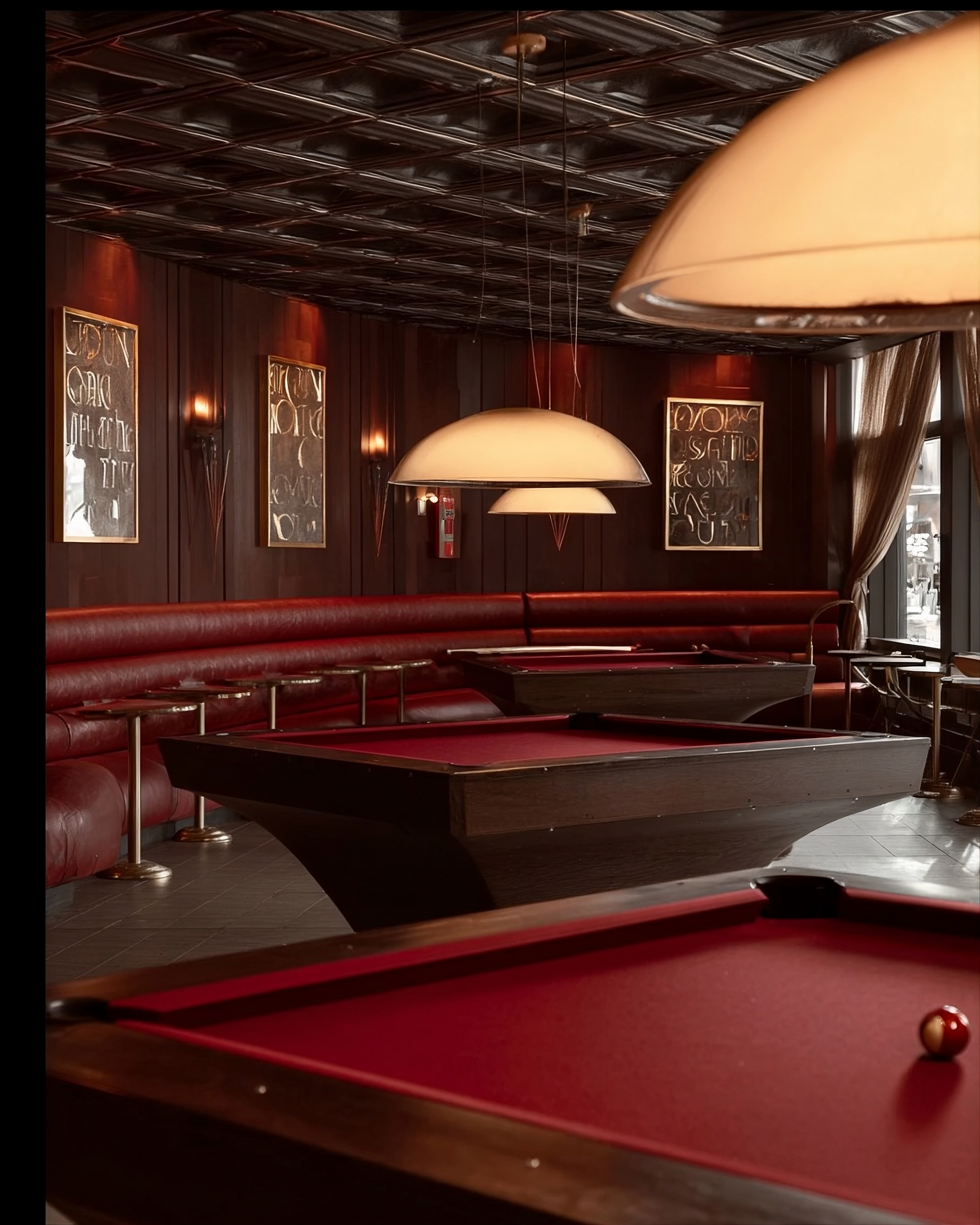
Created with Midjourney
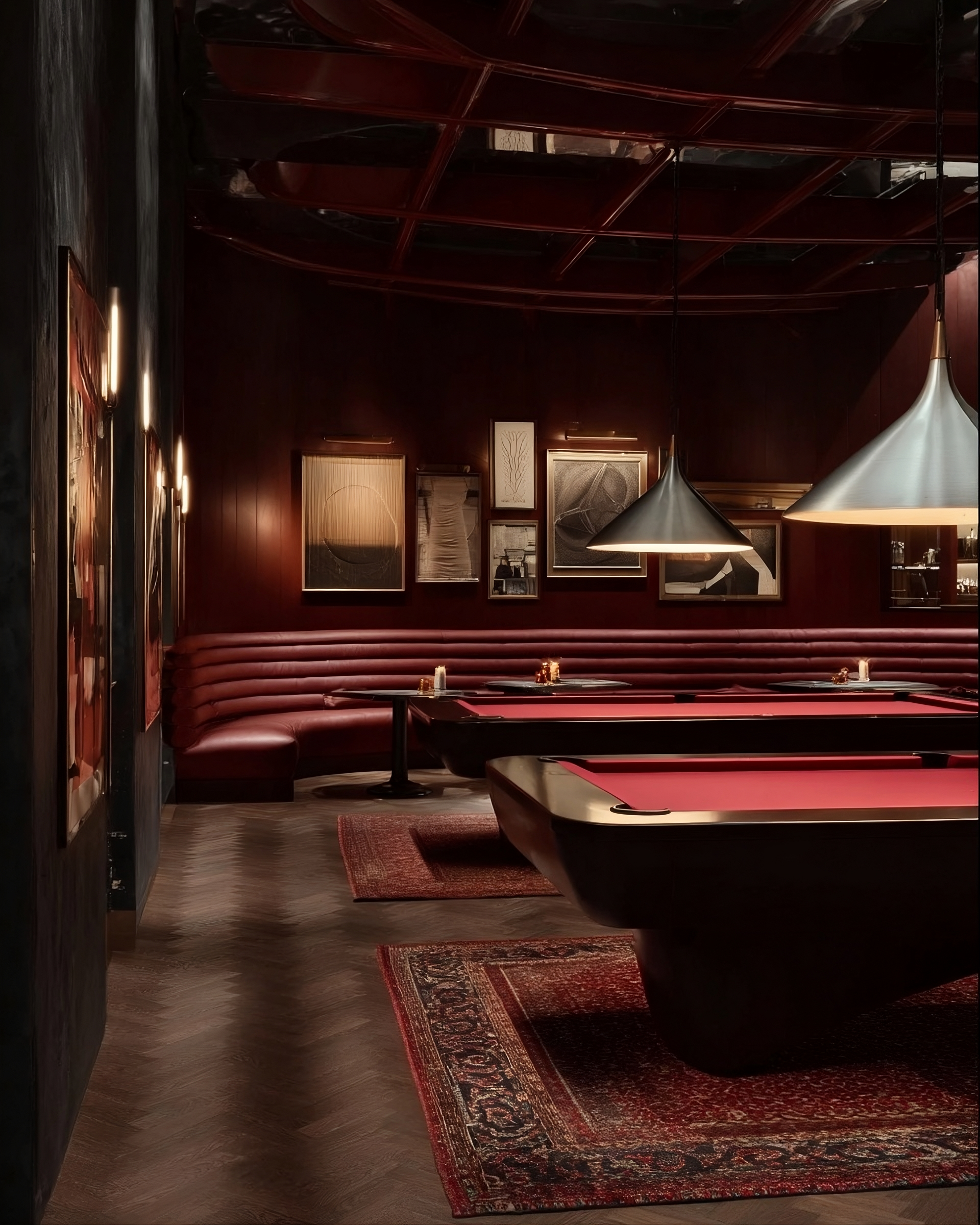
Created with Midjourney
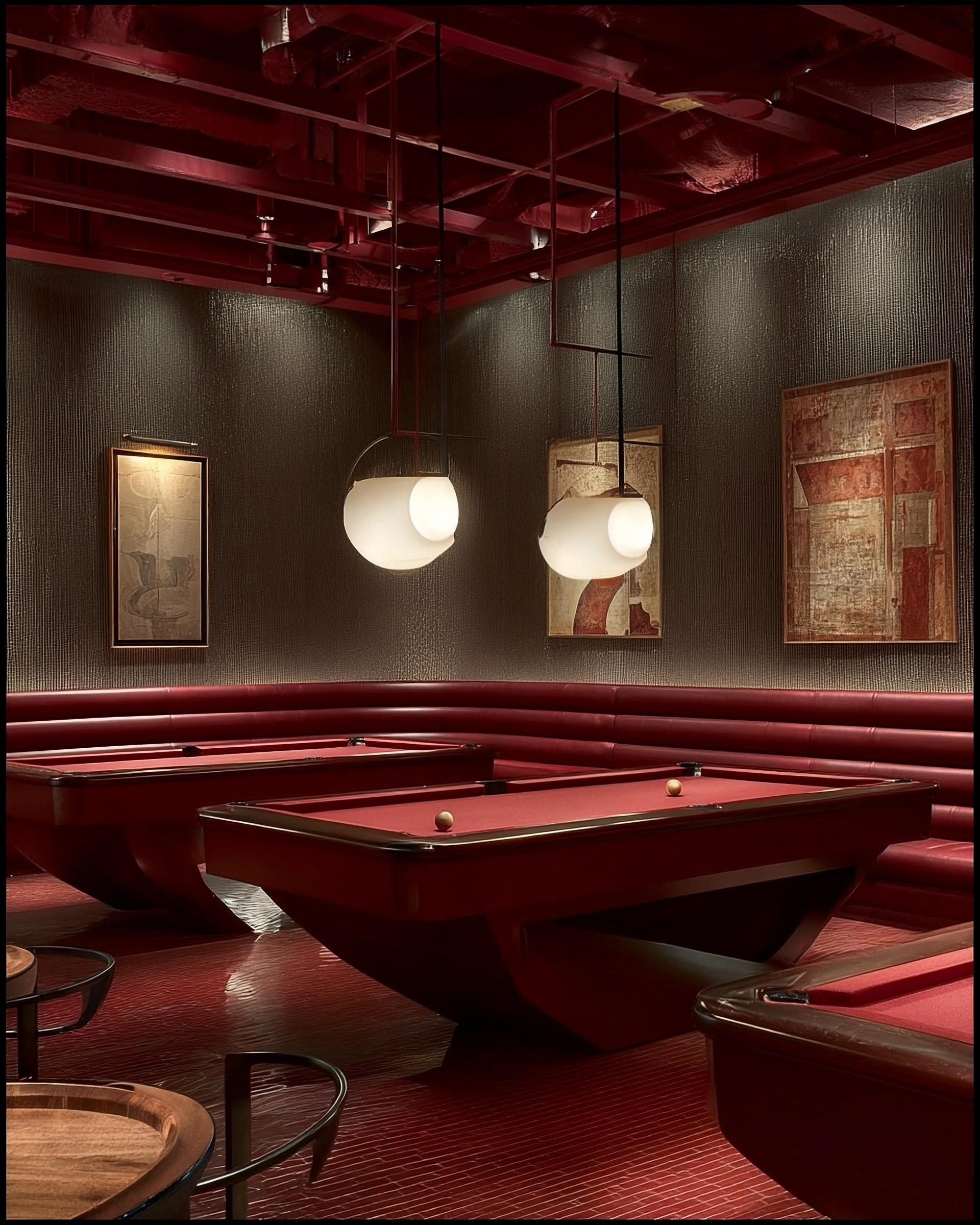
Created with Midjourney
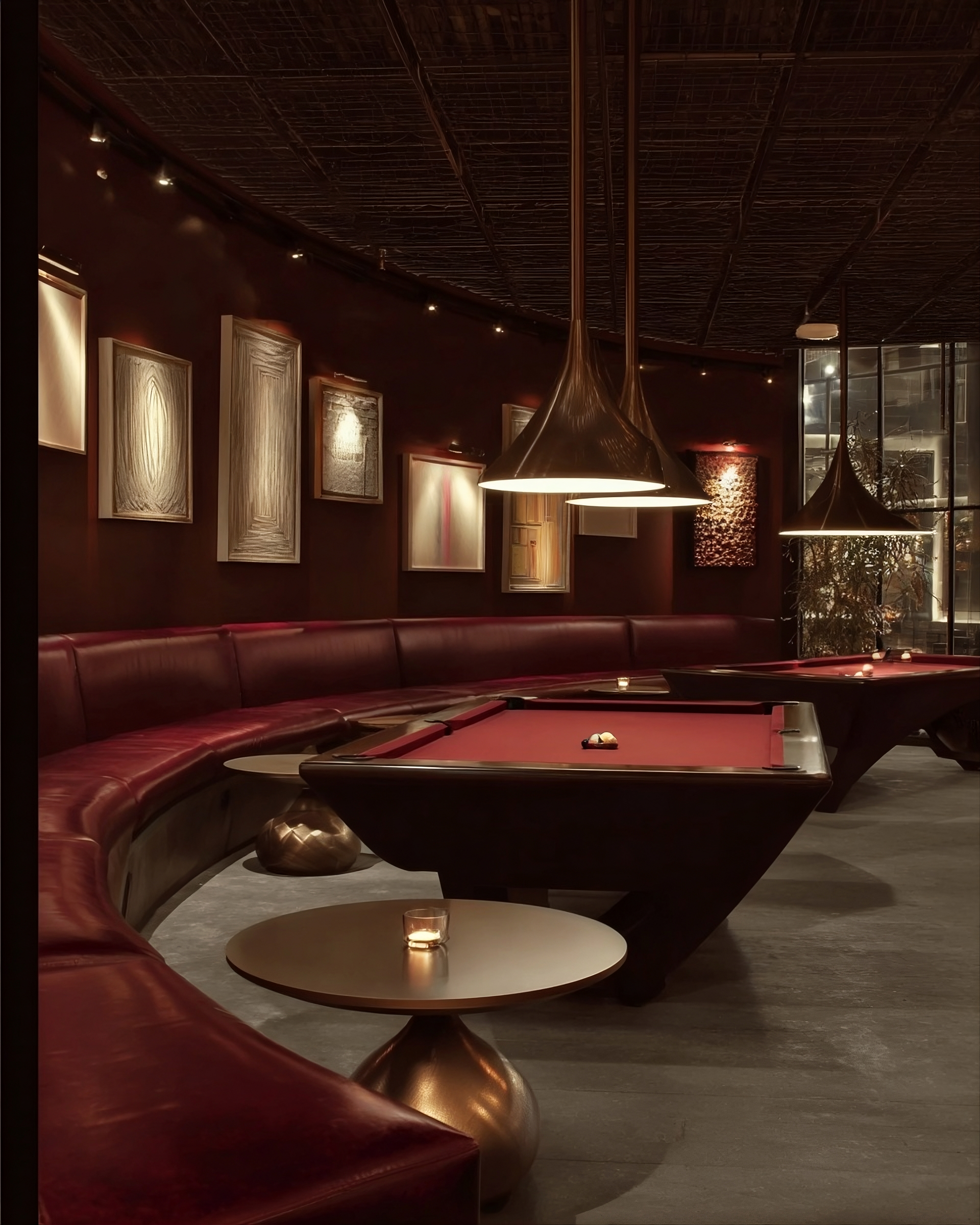
Created with Midjourney
impact
The Parlor proposes a new segment within Cincinnati’s nightlife; one that prioritizes longevity of experience over intensity. By addressing unmet user needs, it has the potential to increase dwell time, encourage repeat visits, and foster organic community building. It also demonstrates how experiential design can operate as a strategic tool, shaping behavior and perception through environment rather than programming alone.
Reflections
This project reinforced the importance of designing for real human behavior, not assumed preferences. It gave me a project to start learning 3D design and spatial design, something I am still mastering. Translating abstract social needs into spatial decisions required constant iteration and restraint. A key learning was that impactful experiences often come from what is removed, not added. Moving forward, I would deepen the operational layer (service design, staffing flows, and real-world feasibility) to further ground the concept. The Parlor ultimately represents a shift in my practice toward designing environments as systems of interaction, not just spaces.