Designing a dual-system portfolio that communicates interdisciplinary work with clarity, structure, and narrative control
Problem
As a multidisciplinary designer working across UI/UX and experiential design, my existing portfolio failed to clearly communicate:
1. The breadth vs. depth of my work in a focused niche
2. A cohesive narrative across different disciplines without sounding like a generalist.
3. My ability to think in systems, not just visuals, which is key in the age of AI.
I critiqued my previous portfolio and outlined key issues:
1. Projects felt fragmented, not systematically connected
2. No clear distinction between digital vs. physical design work
3. Limited ability to showcase process, thinking, and outcomes
4. The platform constrained interaction, resulting in a static, linear experience
5. Additionally, the use of Adobe Portfolio imposed structural and experiential limitations that prevented deeper UX exploration.
Core Problem: A multidisciplinary designer needs a way to present complex, cross-domain work through a structured, narrative-driven interface that reflects both analytical rigor and creative exploration.
Constraints
Platform limitations of Adobe Portfolio:
Restricted layout flexibility
Limited interaction design capabilities
Minimal control over advanced UX patterns
Time constraints while balancing:
Academic workload
Ongoing professional projects
No formal development background:
Required learning no-code / low-code tools in parallel
Risk of over-design:
Combining multiple disciplines could easily result in a visually chaotic system
Process
1. UX Audit & Critique
I began with a structured critique of my existing portfolio:
Evaluated navigation clarity, hierarchy, and flow
Identified friction points in how recruiters interpret work
Mapped gaps between intent vs. perception
This audit reframed the portfolio as a product experience, not just a visual showcase.
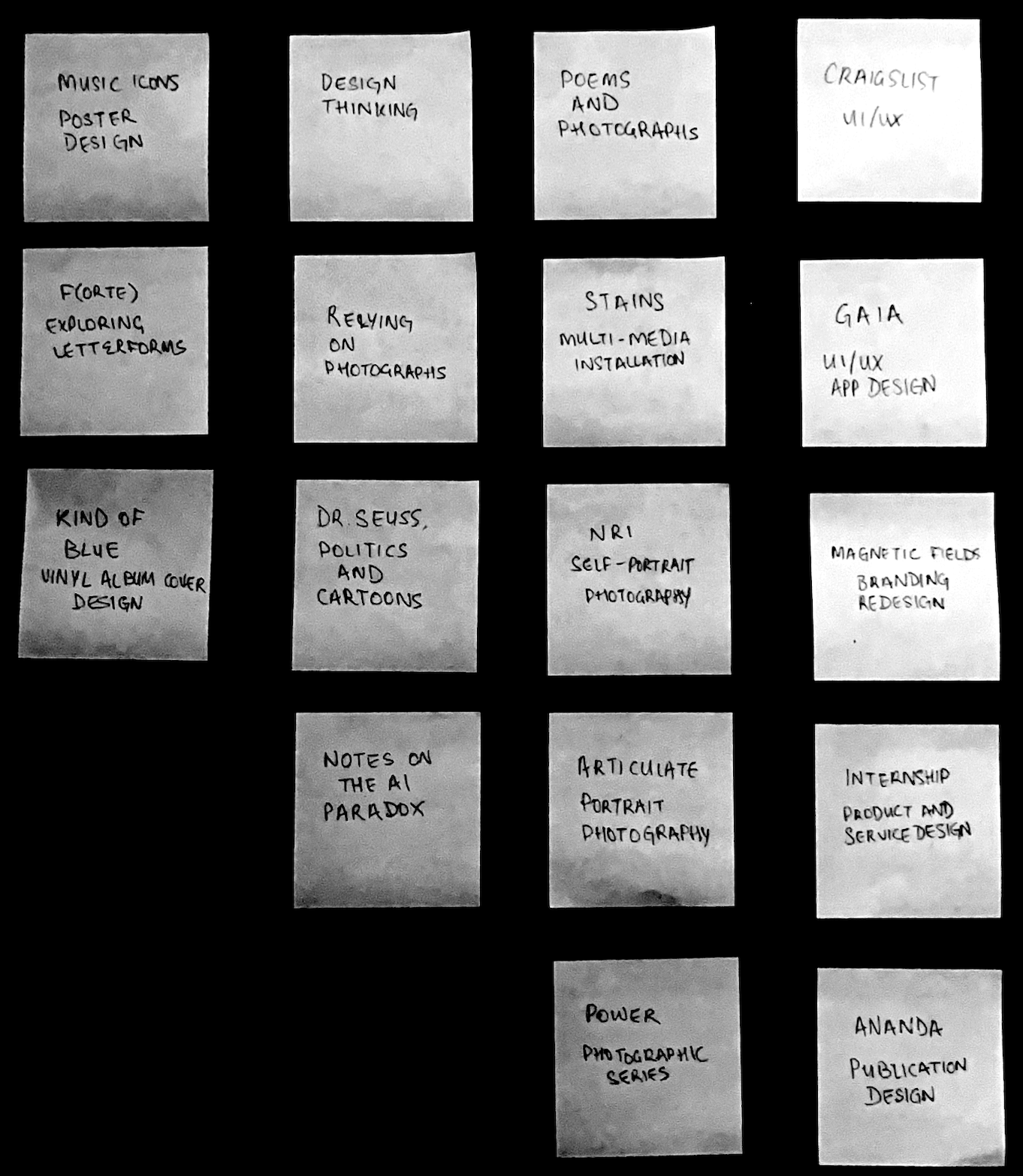
2. Card Sorting Exercise
To resolve structural ambiguity, I conducted a card sorting exercise:
Grouped all projects by: Medium, Intent, Outcome
Tested multiple architectures: By industry, skill, & format.
Final Insight: The most intuitive structure separated work into:
Digital Experiences (UI/UX, Product Design)
Physical Experiences (Experiential, Spatial, Branding)
This became the foundation of the portfolio architecture.
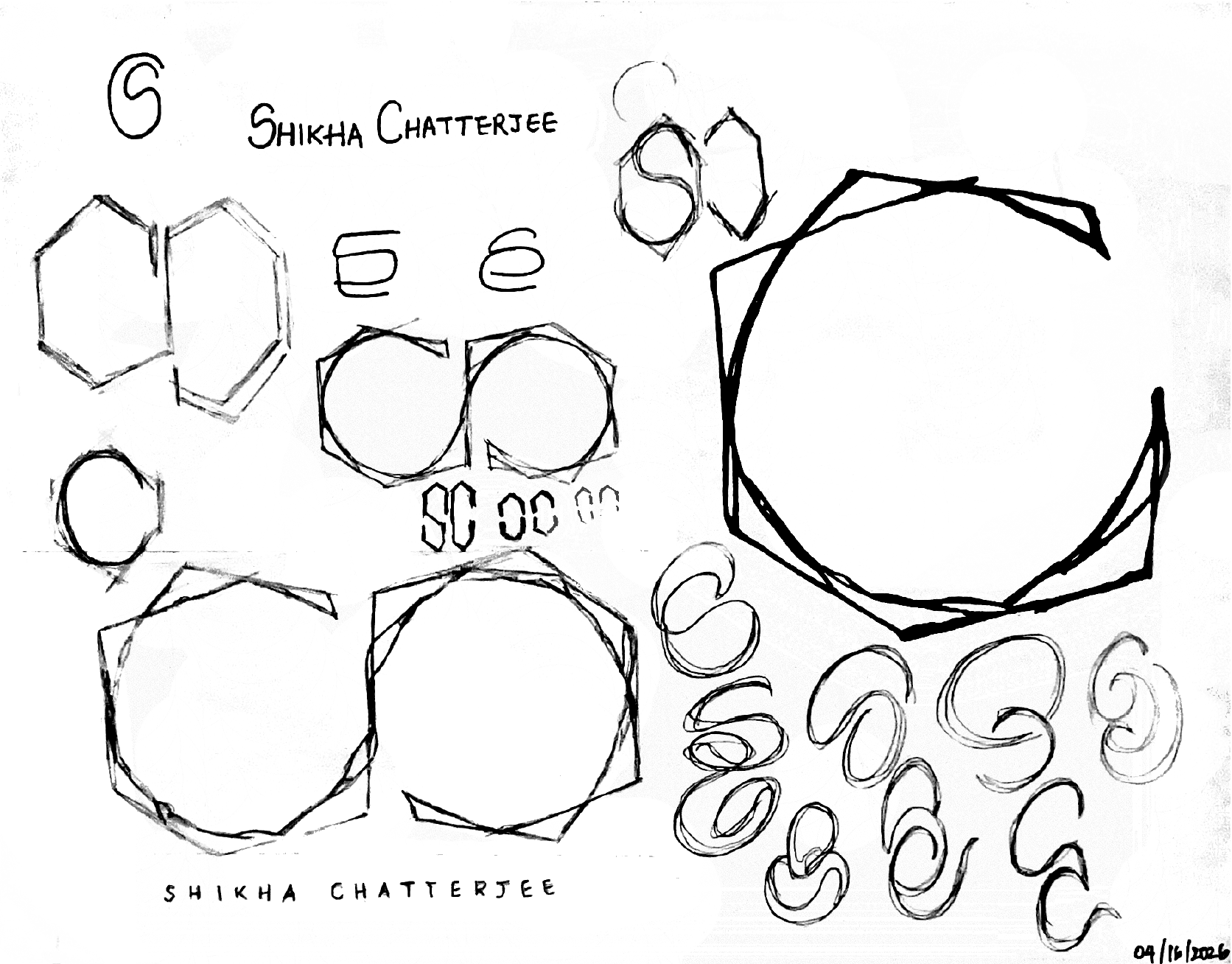
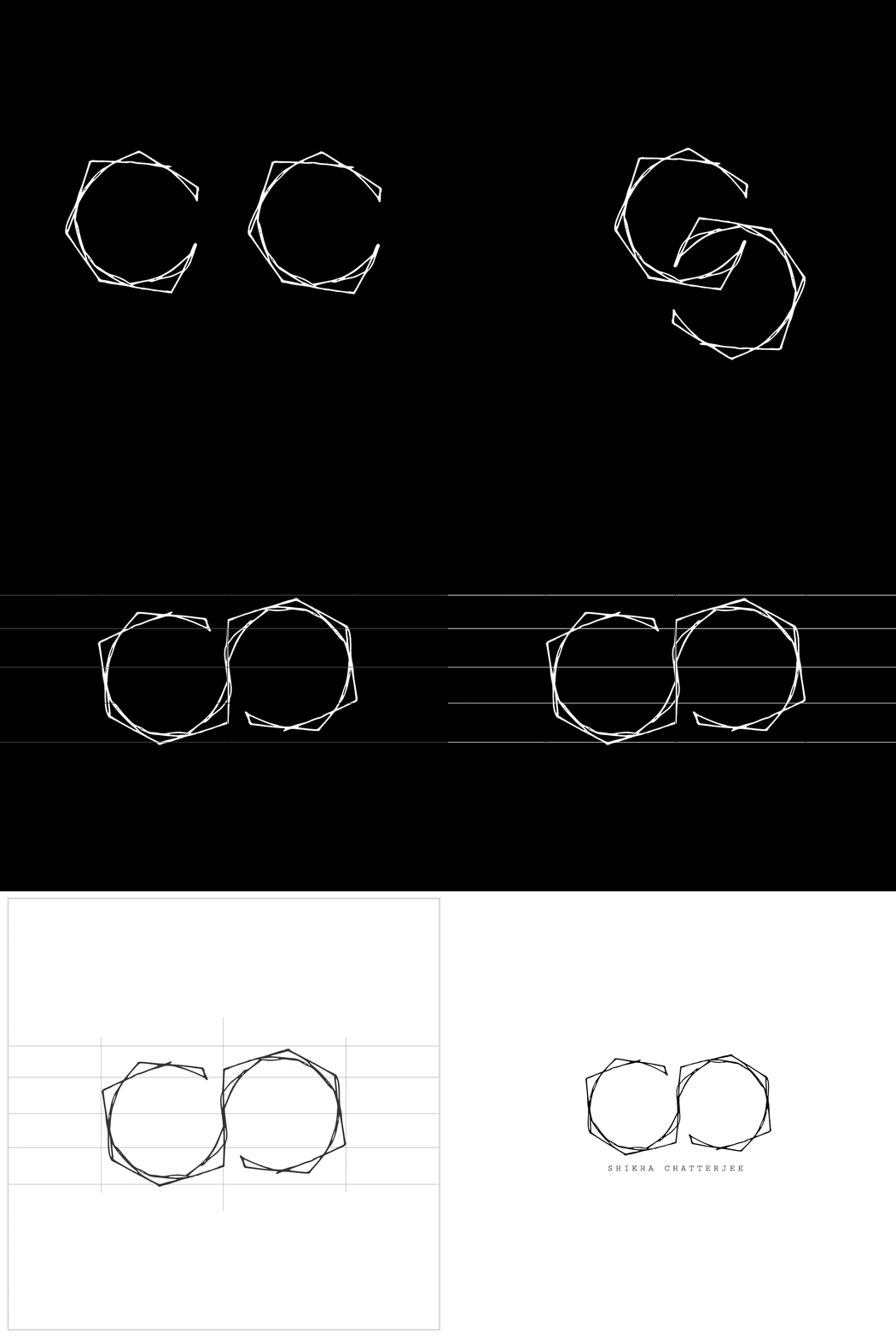
CREATING A PERSONAL LOGO | BLENDING ORGANIC & GEOMETRIC FORMS
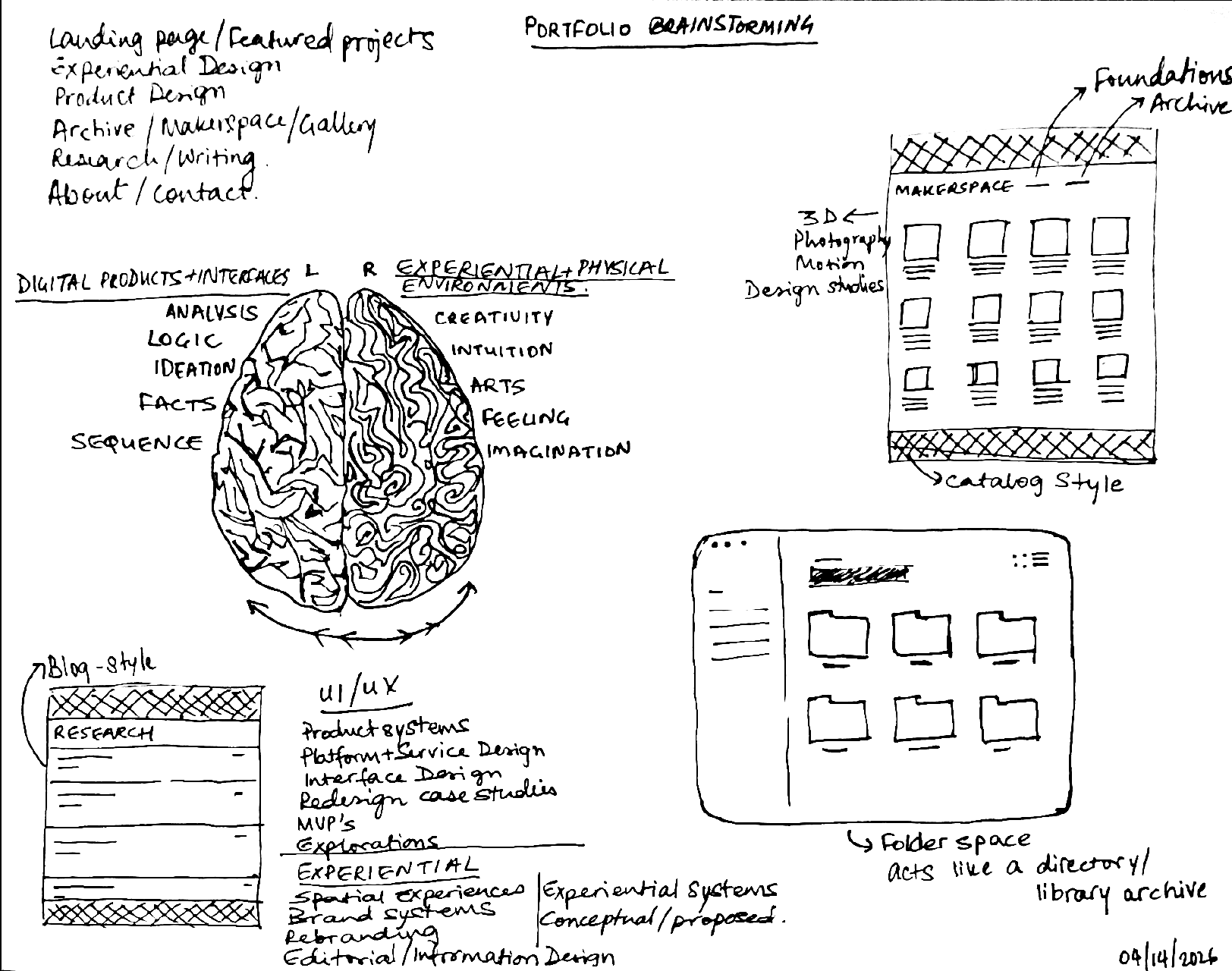
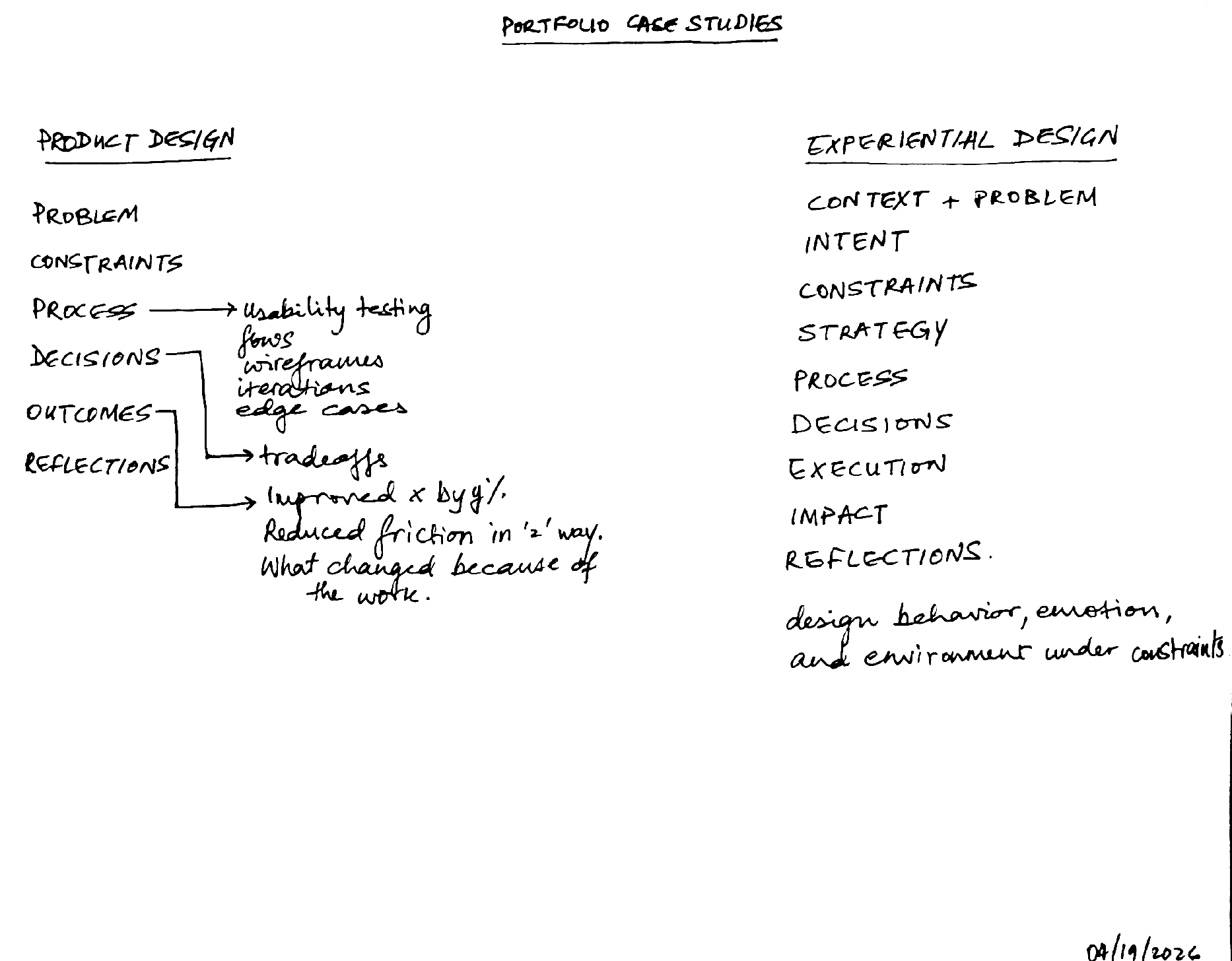
BRAINSTORMING PORTFOLIO ELEMENTS
EXPERIMENTiNG WITH COMPONENTS IN FRAMER

All logos and trademarks are the property of their respective owners and are used solely for illustrative purposes. Their inclusion does not imply any affiliation, partnership, or endorsement.
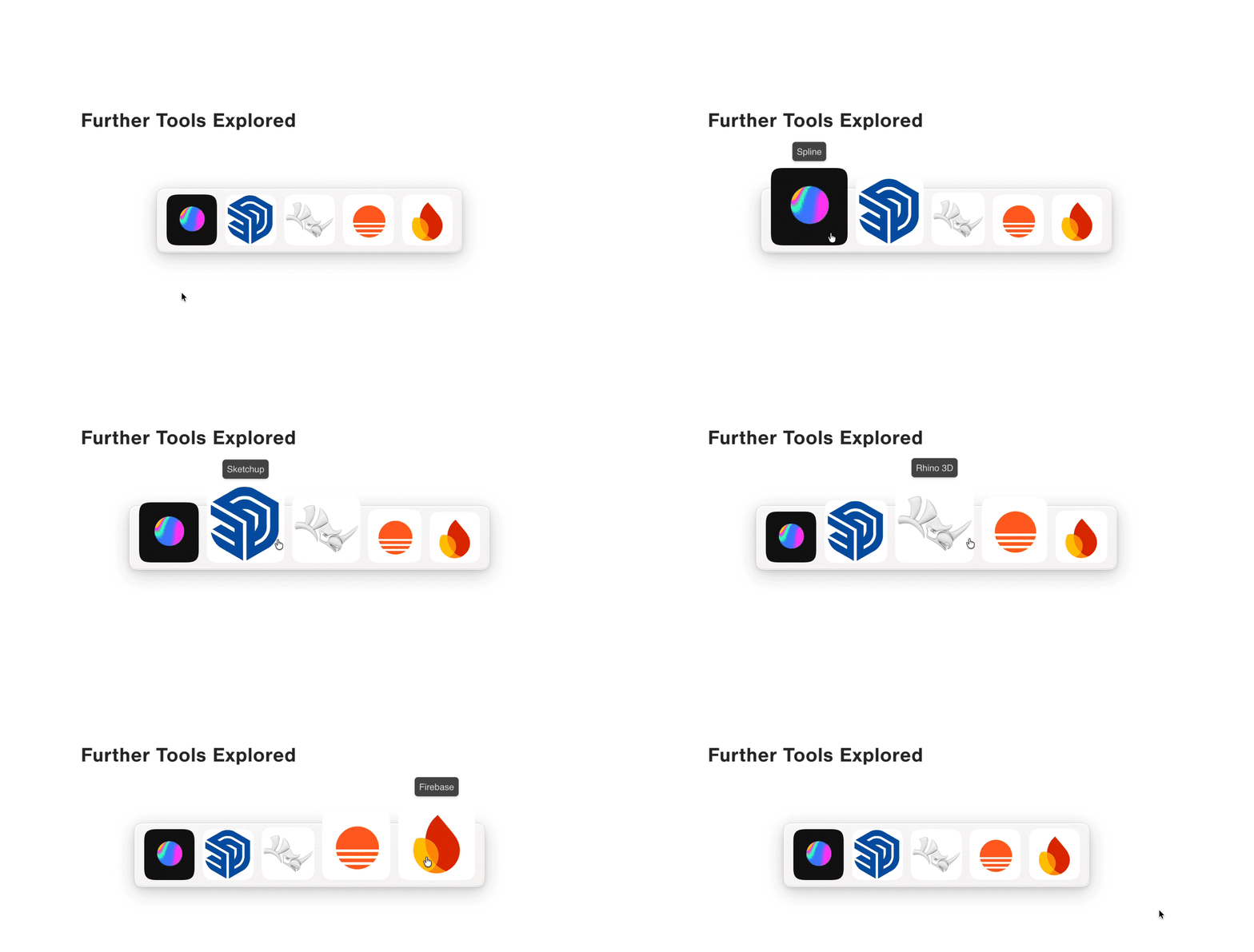
All logos and trademarks are the property of their respective owners and are used solely for illustrative purposes. Their inclusion does not imply any affiliation, partnership, or endorsement.
Key Decisions
Separate Digital vs Physical work → Reduce cognitive load and clarify positioning
Frame portfolio as a system, not a gallery → Increase perceived depth and intentionality
Introduce “archive” as a core feature → Turning portfolio into an evolving body of work
Using makerspace as a visual index → Showcase range without overwhelming case studies
Integrated writing section → Reinforces interdisciplinary thinking and intellectual depth
Exploring AI tools but constraining output → Avoid visual chaos while leveraging speed and experimentation
Outcomes
Clearer communication of:
- Dual identity (Product + Experiential Designer)
- Systems thinking and process depth
Reduced friction in navigation: Users can quickly identify relevant work paths
Increased scalability: Portfolio now functions as a living system, not a static site
Stronger positioning: Moves from “student portfolio” → designer with a point of view
Developed foundational skills in: Interaction design | Information architecture | Tool ecosystems | Early-stage front-end thinking
Reflections
I realized that designing a portfolio is fundamentally a UX problem, not a visual one.
Constraints (like Adobe Portfolio) helped me clarify what truly matters and where I could push the envelope by switching hosts.
AI tools are powerful for exploration, but curation became the real skill and critically thinking about the best tool to use for efficiency.
Structure created freedom and once the system was defined, I could be more intentional with my creativity.
Most importantly, this project reframed my role and the career paths I may pursue in this constantly evolving world.
This portfolio is becoming my anchor, not just by being a place to showcase my work but to design how my work is understood, navigated, and remembered.